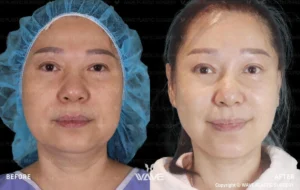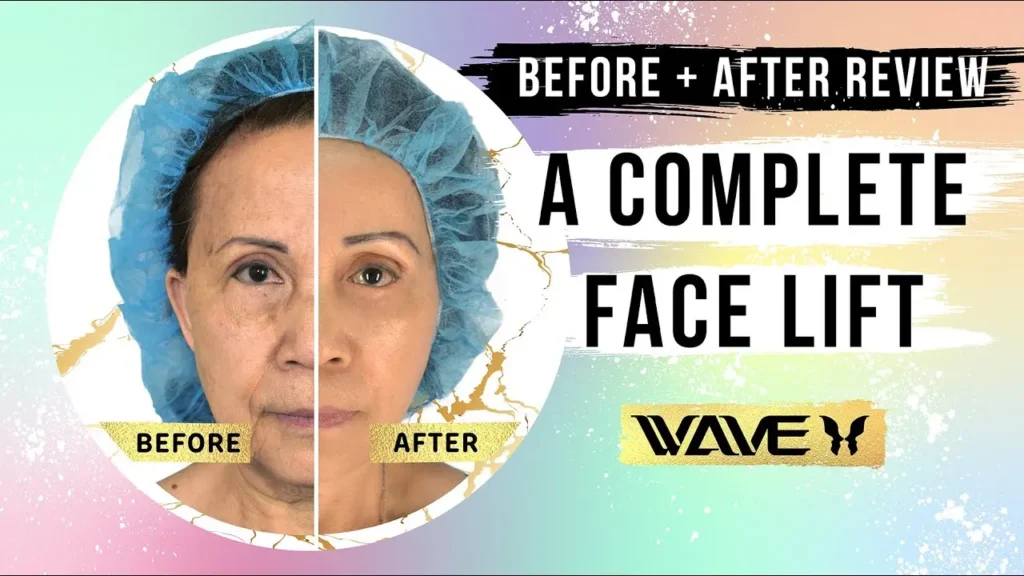



A lunchtime facelift is a marketing term for quick, minimally invasive facial rejuvenation treatments that can be performed in 30 minutes to an hour with little to no downtime. These procedures include injectable neuromodulators, dermal fillers, thread lifts, and energy-based skin tightening treatments that aim to refresh facial appearance without surgical intervention.
The appeal of these treatments is clear for busy professionals and parents who want facial rejuvenation without extended recovery periods. However, the reality is more nuanced than the marketing suggests.
What You’ll Learn:
- Which treatments actually qualify as “lunchtime” procedures
- What results you can realistically expect
- How these options compare to traditional facelift surgery
- Whether these approaches align with your specific goals
Understanding the “Lunchtime Facelift” Concept
The term “lunchtime facelift” is marketing language rather than a specific medical procedure. It refers to facial rejuvenation treatments that can be performed quickly, require minimal downtime, and theoretically allow you to return to work or social activities immediately after treatment.
Common “Lunchtime” Procedures Include:
- Injectable treatments with neuromodulators like Botox
- Dermal fillers for volume restoration
- Thread lift procedures using specialized sutures
- Laser and energy-based skin treatments
- Certain minimally invasive techniques
Each approach has different mechanisms of action, expected results, and longevity of improvement. At Wave Plastic Surgery, we prefer discussing specific treatments and their realistic outcomes rather than using vague terminology that may create unrealistic expectations.
Our board-certified plastic surgeons will help you understand which non-surgical or minimally invasive options can address your concerns and how these compare to surgical alternatives.
Injectable Treatments: The Original Lunchtime Rejuvenation
Injectable treatments represent the most established category of lunchtime facial rejuvenation. These procedures can be performed quickly, require no incisions, and allow immediate return to most activities.
Neuromodulators (Botox, Dysport, Xeomin, Jeuveau)
Neuromodulators are among the most common cosmetic procedures performed worldwide. These medications temporarily relax muscles that create dynamic wrinkles—lines that appear with facial expressions like frowning, squinting, or raising your eyebrows.
Dr. Peter Lee explains the versatility of neuromodulators: “We don’t just use the neuromodulators for the face… We use it also for the body. And one of the common areas that we use it on is the shoulder area. For people who have over developed muscle there, their neck can look short and they don’t have the natural sort of curvature of a beautiful shoulder line.”
Common Treatment Areas:
- Glabellar lines (frown lines between eyebrows)
- Forehead horizontal lines
- Crow’s feet (lines beside the eyes)
- Bunny lines on the nose
- Gummy smile correction
- Corner of mouth lift
- Chin dimpling
- Jawline slimming (masseter reduction)
- Neck bands (platysmal bands)
The Procedure
The procedure takes approximately 10-15 minutes:
- Provider cleanses the treatment area
- Identifies optimal injection points based on facial muscle anatomy
- Administers precise doses using very fine needles
- May apply ice or pressure to minimize bruising
Most patients describe mild discomfort rather than significant pain during injections.
Results and Longevity
Results appear gradually over 3-14 days, with full effects visible by two weeks. Improvement typically lasts 3-6 months, after which treatments can be repeated.
Dr. Lee emphasizes the importance of finding the right dosage: “From a clinical side, the doctors will always be more on the conservative side with the dosage. And that’s why it’s very important that especially if it’s your first time… you always follow-up about two weeks later for reassessment.”
Downtime and Aftercare
There’s truly minimal downtime with neuromodulator treatments:
- Slight redness or small bumps at injection sites (resolves within minutes to hours)
- Minor bruising rarely occurs (can be covered with makeup)
- Return to work immediately
- Avoid lying down for 4 hours after treatment
- Skip vigorous exercise for 4 hours to prevent product migration
Dermal Fillers
Dermal fillers restore lost volume, soften deep folds, enhance facial contours, and improve skin hydration. Unlike neuromodulators that relax muscles, fillers physically fill spaces beneath the skin to create fullness and smooth depressions.
Available Filler Types:
- Hyaluronic Acid Fillers (Juvéderm, Restylane) – Most common, reversible, natural integration
- Calcium Hydroxylapatite (Radiesse) – Firmer support for structural enhancement
- Poly-L-lactic Acid (Sculptra) – Stimulates gradual collagen production
Common Treatment Areas:
- Nasolabial folds (smile lines)
- Marionette lines (lines from mouth corners downward)
- Lips (volume and shape enhancement)
- Cheeks (mid-face fullness restoration)
- Temples (softening hollowness)
- Under-eye hollows (tear troughs)
- Chin (projection and shape improvement)
- Jawline (definition enhancement)
The Filler Procedure
Dr. Lee explains the importance of customization: “One product is not great for one person or any one given situation. That’s why a thorough consultation is essential because one product is not great for all areas. Sometimes it is a matter of mixing different products to address different areas and establish overall balance to the face.”
What to Expect (15-45 minutes):
- Cleansing and optional topical numbing cream
- Identification of optimal injection points
- Filler administration using needles or cannulas
- Sculpting and massaging for smooth integration
- Most modern fillers contain lidocaine for comfort
Results and Longevity
Immediate to Long-Term:
- Results visible immediately (some swelling may obscure final outcome for a few days)
- Longevity varies by product and area: 6-24 months
- Hyaluronic acid fillers can be dissolved with hyaluronidase if needed
Downtime
What to Expect:
- Swelling at injection sites: 2-7 days typically
- Possible bruising (minimize by avoiding blood-thinning medications/supplements for one week prior)
- Most patients return to work immediately
- Some schedule before weekends to allow swelling to resolve
Thread Lifts: Minimally Invasive Lifting
Thread lifts represent a middle ground between injectables and surgical facelifts. These procedures use specialized sutures to lift and reposition sagging facial tissues while stimulating collagen production for continued improvement over time.
How Thread Lifts Work
Dr. Lee explains the multifaceted mechanism: “Using the thread causes tissue contraction. It also causes new collagen growth or neocollagenesis. And through that, it also volumizes.”
This means thread lifts don’t simply pull skin tighter—they create structural support through multiple mechanisms.
Thread Types Available:
- Barbed Threads – Tiny projections grip tissue for mechanical lifting
- Smooth Threads – Support and stimulate collagen without lifting
- Twisted Threads – Provide volume, ideal for deep folds
All modern thread lifts use PDO (polydioxanone) threads, the same absorbable material used in surgical sutures.
Wave Plastic Surgery Thread Lift Options:
- Flash Lift – Combines anchoring threads (fixed to deep structures) and floating threads (embedded beneath skin) for comprehensive lifting
- New Lift – Uses only floating threads for subtle enhancement
The Thread Lift Procedure
Thread lift procedures typically take 30-60 minutes depending on the number of threads used and areas treated.
Procedure Steps:
- Cleansing and marking the treatment area
- Administering local anesthesia (with or without mild sedation)
- Making small entry points (not incisions requiring stitches)
- Inserting threads through cannulas using predetermined trajectories
- Securing or trimming threads as needed
Most patients experience pressure and pulling sensations but not significant pain during the procedure.
Dr. Lee notes that “in most patients, we perform this procedure under local anesthesia. However, depending upon how sensitive the patient may be, we sometimes perform this procedure under IV sedation.”
Recovery and Results
While thread lifts require less downtime than surgical facelifts, they’re not truly “lunchtime” procedures despite sometimes being marketed as such.
Recovery Timeline:
- Swelling: 1-2 weeks typically
- Bruising (if it occurs): 3-4 days
- Return to desk work: Within a few days
- Activity restrictions: 3-4 weeks (avoid excessive facial expressions, hard foods, certain activities)
Dr. Lee provides important post-procedure guidance: “A key post procedure instruction is to minimize facial expression. And that means no yawning, not much smiling, and certainly not opening the mouth too wide, at least for the first three to four weeks.”
Results Timeline:
- Immediate mechanical lifting effect visible
- Continued improvement over 2-3 months as collagen production increases
- Outcomes typically last 1-2 years (varies based on individual factors, thread type/number, treatment area)
Ideal Candidates for Thread Lifts
Best Results For:
- Patients with mild to moderate facial aging
- Relatively good skin elasticity
- Realistic expectations about degree of improvement
- Early jowling concerns
- Mild cheek descent
- Subtle loss of jawline definition
- Patients not ready for surgical intervention
Limitations – Thread Lifts Cannot Address:
- Significant excess skin
- Advanced jowling
- Substantial neck laxity
- Very thin skin (poor candidate)
- Heavy facial tissues (poor candidate)
- Advanced aging (surgical options typically better)
Patients with these concerns typically achieve better results with surgical options like the Cure Lift-S or comprehensive facelift.
Energy-Based Skin Tightening Treatments
Several non-invasive technologies use heat energy to stimulate collagen production and tighten skin. While these treatments offer no downtime, they require multiple sessions and produce gradual rather than immediate results.
Ultherapy
Ultherapy uses focused ultrasound energy to heat tissue deep beneath the skin surface, stimulating new collagen production.
Treatment Areas:
- Brow lift
- Under-chin tightening
- Neck tightening
- Décolletage improvement
What to Expect:
- Treatment time: 30-90 minutes (depending on areas)
- Sensation: Brief pulses of heat or tingling during energy delivery
- Results: Develop gradually over 2-6 months as new collagen forms
- Longevity: 1-2 years
Downtime:
- No traditional downtime—return to all activities immediately
- Temporary redness, swelling, tenderness may occur
- Side effects typically resolve within a few days
Morpheus8
Morpheus8 combines microneedling with radiofrequency energy, penetrating deeper than traditional microneedling while delivering heat to stimulate collagen remodeling.
Benefits:
- Improves skin texture
- Reduces fine lines and wrinkles
- Tightens mild skin laxity
- Can treat both face and body
Treatment Details:
- Duration: 30-60 minutes
- Comfort: Topical numbing cream applied beforehand
- Redness/swelling: 2-5 days typically
- Return to work: Next day with mineral makeup
- Results: Develop over several months
- Sessions: Multiple treatments typically recommended for optimal outcomes
Other Energy Devices
Wave Plastic Surgery offers additional skin tightening technologies:
FORMA Radiofrequency:
- Gently heats skin to stimulate collagen
- Comfortable treatment
- No downtime
- Can be performed during lunch break
- Multiple sessions needed
- Subtle rather than dramatic results
Laser and Light-Based Treatments
Various laser and intense pulsed light (IPL) treatments improve skin tone, texture, and pigmentation. While these don’t “lift” in the traditional sense, they can significantly rejuvenate your appearance by addressing skin quality issues.
IPL/Photofacial Treatments
Lumecca IPL treats sun damage, age spots, redness, and uneven skin tone.
Treatment Overview:
- Duration: 20-30 minutes
- Discomfort: Minimal
- Return to activities: Immediate
- Pigmented spots: Temporarily darken before flaking off over 1-2 weeks
- Sessions: Multiple treatments may be needed for optimal results
Laser Skin Resurfacing
Laser treatments range from gentle “lunchtime” procedures to more aggressive resurfacing requiring several days of downtime.
Options Available:
- Gentle Fractional Lasers – Stimulate collagen with minimal peeling
- Aggressive Ablative Lasers – Dramatically improve skin texture but require 5-10 days of healing
What “Lunchtime Facelift” Treatments Cannot Do
Setting realistic expectations is crucial when considering any cosmetic procedure marketed with the “lunchtime” label. While these treatments can produce noticeable improvements, they have significant limitations compared to surgical options.
Limitations of Non-Surgical Approaches
Lunchtime Procedures Cannot:
- Address significant skin excess
- Treat substantial jowling effectively
- Correct pronounced neck bands
- Manage severe mid-face descent
- Reposition descended facial structures as effectively as surgery
- Remove redundant tissue
- Correct significant volume loss comprehensively
- Provide results lasting as long as surgical intervention
If you have substantial jowling, pronounced neck bands, or severe mid-face descent, non-surgical options will provide disappointing results.
Dr. Lee emphasizes realistic expectations: “Trying to treat [facial aging] using monotherapy, meaning using one treatment, will always lead to failure. But currently, the modern method is to use multimodality using multiple treatments to get [concerns] under control and improve… with an ultimate goal of solid 70% improvement.”
The Timeline Myth
While procedures themselves may be performed quickly, calling them “lunchtime” treatments can be misleading.
Reality of Recovery Times:
- Injectable Treatments – Swelling or bruising may last several days
- Thread Lifts – 1-2 weeks for significant swelling to resolve; 3-4 weeks of facial expression restrictions
- Energy-Based Treatments – Temporary redness and swelling
- Collagen-Stimulating Treatments – Results develop gradually over weeks to months
Important Note: If you have an important event in a few days, most practitioners recommend avoiding new treatments due to unpredictable swelling or bruising timelines.
Combining Treatments for Optimal Results
Many patients achieve their best outcomes by combining multiple treatments rather than relying on a single procedure. This multimodal approach addresses facial aging from multiple angles.
Strategic Treatment Plans
A comprehensive “lunchtime facelift” approach might include:
Multimodal Treatment Strategy:
- Neuromodulators – Relax dynamic wrinkles and prevent new lines
- Strategic Filler Placement – Restore volume and improve contours
- Thread Lift – Address mild to moderate tissue lifting
- Skin Treatments – Improve texture, tone, and tightness
Dr. Lee notes that even with surgical procedures, combination approaches often work best: “I’m a strong believer that especially in non surgical procedures, to maximize the result, you have to do combination of treatments and maintenance thereafter.”
Maintenance Programs
Non-surgical results are temporary, requiring ongoing maintenance. Many patients establish regular treatment schedules:
Typical Maintenance Schedule:
- Neuromodulators – Every 3-4 months
- Filler Touch-Ups – Every 6-18 months (depending on product)
- Skin Treatments – Quarterly or semi-annually
- Thread Lifts – Every 1-2 years (if desired)
Wave Plastic Surgery offers the Aesthetic Ascend Program, providing exclusive discounts on non-surgical treatments, skincare products, and member-only promotions, making regular maintenance more accessible.
When to Consider Surgical Options Instead
While lunchtime procedures work wonderfully for some patients, others achieve better results with surgical intervention.
Consider Facelift Surgery If You Have:
- Significant jowling and loss of jawline definition
- Substantial neck laxity with visible bands
- Marked mid-face descent creating deep folds
- Excess skin that cannot retract on its own
- Maximized non-surgical options with diminishing returns
Recovery Comparison:
- Surgical procedures require 2-3 weeks for most swelling to resolve
- Results are more dramatic and longer-lasting
- The Cure Lift-S offers a minimally invasive surgical option for patients who need more than non-surgical treatments but aren’t ready for comprehensive facelift surgery
Choosing the Right Provider
Whether pursuing lunchtime procedures or surgical intervention, provider selection significantly impacts your results and safety.
Look For:
- Board certification by the American Board of Plastic Surgery
- Extensive experience with the specific treatments you’re considering
- Comprehensive menu of options (ensuring unbiased recommendations)
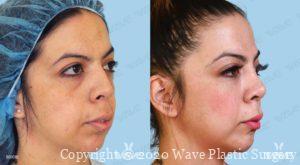
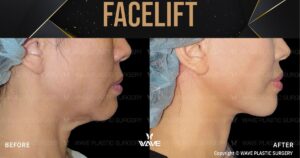
- Excellent before-and-after photos demonstrating consistent results
- Accredited facilities meeting safety standards
Wave Plastic Surgery Credentials:
- All doctors are board-certified
- Training from prestigious institutions: Harvard, Yale, Stanford, and UCSF
- Facilities accredited by the Accreditation Association for Ambulatory Health Care (AAAHC)
- Highest safety standards maintained
Schedule Your Personalized Consultation
If you’re interested in non-surgical or minimally invasive facial rejuvenation, we invite you to schedule a consultation at Wave Plastic Surgery.
Your Consultation Will Include:
- Comprehensive evaluation of your concerns
- Explanation of which treatments can realistically address your goals
- Discussion of expected results and recovery
- Personalized treatment plan recommendation
Whether you’re looking for subtle enhancement with minimal downtime or dramatic transformation through surgical intervention, our team has the expertise to help you achieve beautiful, natural-looking results. We have convenient locations in Los Angeles, Costa Mesa, San Francisco, Arcadia, and Rowland Heights.