


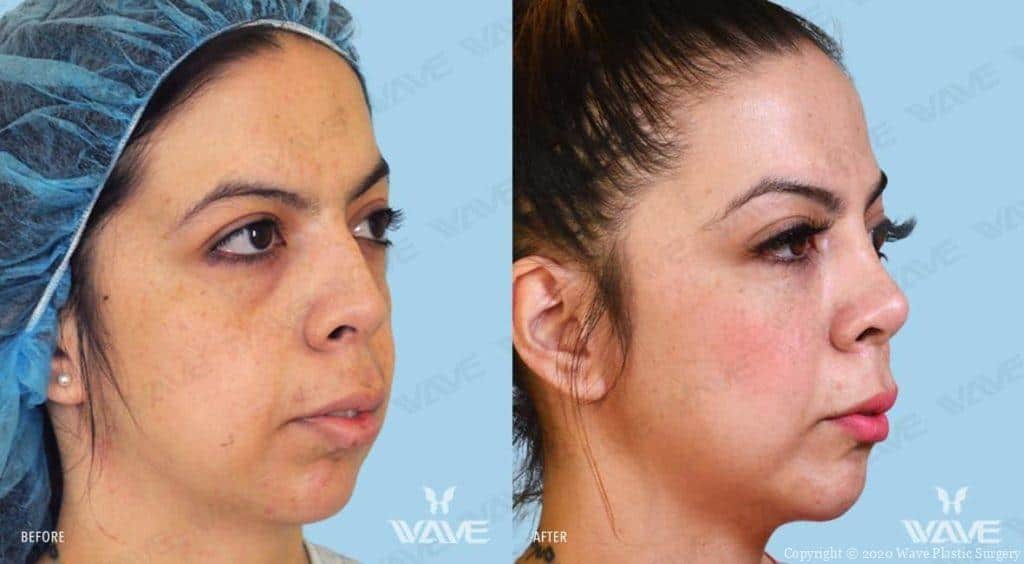
If you’ve been exploring facelift options, you’ve likely encountered the term “endoscopic facelift” — and wondered how it differs from a traditional facelift, whether it’s right for your concerns, and what recovery actually looks like. It’s one of the most misunderstood procedures in facial plastic surgery, partly because the word “endoscopic” sounds clinical and complex, and partly because results vary so significantly depending on who performs it.
This guide breaks down everything you need to know about the endoscopic facelift: how it works, who it’s best suited for, what to expect during recovery, and why surgical expertise matters more with this technique than almost any other.
How an Endoscopic Facelift Works
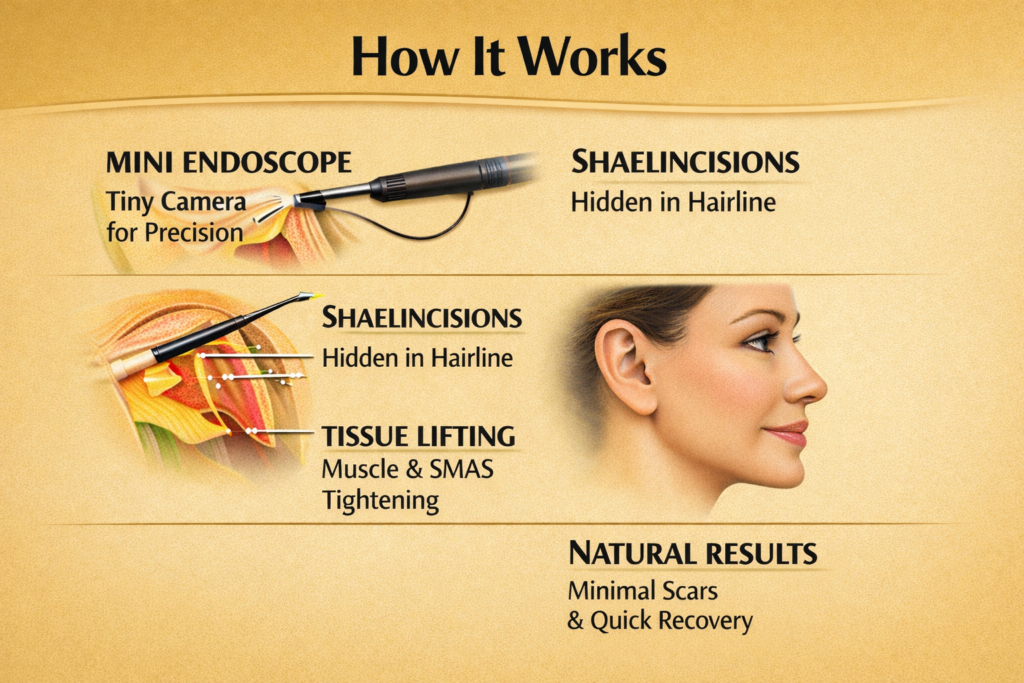
An endoscopic facelift is a minimally invasive facial rejuvenation procedure that uses a tiny camera — called an endoscope — to allow the surgeon to work beneath the skin through small incisions, rather than making a long continuous cut around the hairline and ear.
The incisions are typically placed inside the hairline at the temple, extending just to the upper portion of the ear. Through these access points, the surgeon inserts the endoscope alongside specialized instruments to lift and reposition the underlying facial muscles and soft tissue with precise camera-guided visualization.
What makes this approach fundamentally different isn’t just the size of the incisions — it’s how the lifting actually happens beneath the surface. As Dr. Peter Lee, Founder and Chief Surgeon at Wave Plastic Surgery, explains: the key to any facelift is not how much you pull, but how thoroughly you release the tissue attachments first. “Before we actually pull and lift, what we wanna do is we wanna release all the attachments of the muscle,” Dr. Lee notes. “When you forcibly pull on something, there’s going to be a lot of resistance — and if there’s a lot of resistance, the tendency is that as time goes by, it’s going to fall back much quicker.”
That philosophy — release, then lift — is what separates natural-looking, long-lasting results from the pulled or windblown appearance many patients fear.
What the Endoscope Actually Does
The camera used in endoscopic surgery isn’t just a convenience — it’s what makes the technique possible at all. High-resolution endoscopic cameras provide magnified, real-time views of the tissue layers beneath the skin, allowing the surgeon to work with a level of precision that simply isn’t achievable when operating through longer incisions at the surface.
This is particularly important when working near the delicate structures of the face: the facial nerve branches, fat compartments, and the SMAS (superficial musculoaponeurotic system) layer that forms the structural foundation of the face. Camera-assisted visualization helps surgeons navigate these layers safely and accurately, which is why advanced training in endoscopic technique is so critical.
Who Is a Good Candidate for an Endoscopic Facelift?
The endoscopic facelift is not a one-size-fits-all solution. It’s best suited for patients who are beginning to notice the early-to-moderate signs of facial aging but don’t yet require the more extensive correction of a full High SMAS Face & Neck Lift.
Ideal candidates typically include:
- Patients in their 30s, 40s, or early 50s with early signs of facial descent
- Those experiencing deepening nasolabial folds, mild jowling, or hollowness in the cheek region
- Patients with drooping at the corners of the mouth (marionette lines) who want a definitive result without a full face and neck lift
- Individuals who have tried non-surgical treatments like FaceTite or Thread Lift and are now seeking a more lasting surgical improvement
Patients with more advanced laxity — particularly those with significant neck sagging — are generally better candidates for a traditional facelift surgery or a High Extended SMAS Face and Neck Lift. A thorough consultation is the only way to determine which approach is appropriate for your anatomy.
The Wave Lift™: Wave’s Endoscopic Facelift Technique
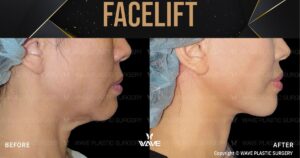
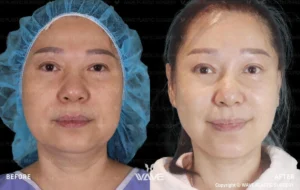
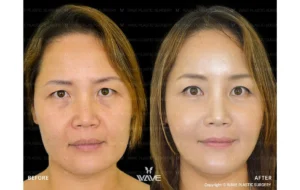
At Wave Plastic Surgery, the endoscopic facelift is performed as the Wave Lift™ — a signature technique developed by Dr. Peter Lee that combines endoscopic visualization with precise sub-muscular release to achieve natural-looking, lasting facial rejuvenation.
The Wave Lift™ is designed to address the hallmark signs of early facial aging: jowling, deepening folds, cheek descent, and drooping at the corners of the mouth. The procedure takes approximately one and a half hours and can be performed under IV sedation with local anesthesia or general anesthesia, depending on patient preference.
What distinguishes the Wave Lift™ is the surgical philosophy behind it. Rather than relying on surface tension or aggressive skin pulling, Dr. Lee works at the deeper muscular layer — releasing the tissue from its bony attachments before gently repositioning it upward and into a more youthful position. The goal, as Dr. Lee consistently emphasizes, is threefold: naturalness, a definitive result, and longevity.
To learn more about the Wave Lift™ specifically, visit the dedicated Endoscopic Facelift page on waveplasticsurgery.com.
Why Dr. Peter Lee’s Credentials Matter for Endoscopic Surgery
Not all surgeons are equally equipped to perform endoscopic procedures. The technique demands an elevated level of spatial awareness and instrument control — surgeons must operate skillfully using camera visualization rather than direct sight lines, which requires specialized training and extensive hands-on experience.
Dr. Peter Lee is one of a select few surgeons in the world to hold the designation of Advanced ENDOTINE Bioskills Surgeon Educator and Trainer — a credential that reflects not only his own mastery of endoscopic technique, but his recognition as someone qualified to teach it to other surgeons. Dr. Lee regularly travels internationally to train plastic surgeons in South Korea, China, and other countries on advanced endoscopic surgical methods.
This level of expertise matters enormously for patients. The endoscopic facelift is a procedure where the difference between a natural, rejuvenated outcome and an overdone or asymmetrical result often comes down to the depth of the surgeon’s training. When you’re considering an endoscopic facelift, the surgeon’s specific experience with this technique should be at the top of your evaluation criteria.
You can learn more about Dr. Lee’s background and credentials on the Meet the Doctors page.
Endoscopic Facelift Recovery: What to Expect
One of the primary advantages of the endoscopic approach is a faster, less disruptive recovery compared to more extensive facelift techniques. Because the incisions are smaller and the procedure avoids the more aggressive skin excision of a traditional facelift, patients generally experience less bruising and a quicker return to normal activity.
Here’s a general recovery timeline for the Wave Lift™ / endoscopic facelift:
Days 1–2: A head bandage is placed immediately following surgery and removed within the first 48 hours. After removal, patients can wash their hair and shower.
Week 1–2: Most patients experience moderate swelling and some tightness. There’s typically minimal pain. Stitches are removed between 10 and 14 days post-surgery.
Week 2–3: For most patients, approximately 80% of the swelling has resolved by the two-week mark, making this a realistic window to return to work or social activities.
Months 1–2: A temporary decrease in facial sensation is common and expected. This resolves for most patients within one to two months as the nerves recover.
6 Months: Final results become fully visible as residual swelling and tissue settling complete.
For a more detailed look at what to expect after surgery, the Facelift Recovery Timeline article on the Wave blog provides a week-by-week breakdown.
Endoscopic Facelift vs. Other Facelift Options
Patients often ask how the endoscopic facelift compares to other procedures they’ve heard about. Here’s a brief overview to help frame the differences:
Endoscopic Facelift vs. Mini Facelift: A mini facelift typically addresses a more limited area — primarily jowling — through a short scar technique. An endoscopic facelift uses camera-assisted sub-muscular work to achieve more comprehensive mid-face and lower face correction with comparable or slightly more involved recovery.
Endoscopic Facelift vs. High SMAS Facelift: The High SMAS Face & Neck Lift is the more extensive option, ideal for patients with significant laxity in the lower face and neck. It involves longer incisions and a longer recovery, but addresses a broader range of aging changes. For patients who don’t yet need that level of correction, the endoscopic approach offers a powerful intermediate option.
Endoscopic Facelift vs. Thread Lift: A thread lift is entirely non-surgical, using dissolvable sutures to create temporary lifting. Results are subtle and typically shorter-lived. An endoscopic facelift is surgical and provides more significant, longer-lasting improvement. The Facelift vs. Thread Lift article on the Wave blog explores this comparison in depth.
Endoscopic Facelift vs. FaceTite: FaceTite uses radiofrequency energy to tighten skin and soft tissue without surgery. It’s an excellent option for patients not yet ready for surgery, but it cannot achieve the same degree of repositioning as an endoscopic lift. Some patients use FaceTite as a bridge or combine it with surgical procedures.
What Does an Endoscopic Facelift Cost?
Endoscopic facelift pricing varies considerably based on the complexity of the procedure, the surgeon’s level of experience and specialization, the geographic location of the practice, and the specific techniques employed. Surgeon fees for an endoscopic facelift generally range from $7,000 to $17,000 or more.
It’s important to note that these figures reflect surgeon’s fees only — operating room fees and anesthesia are typically billed separately and will add to the total cost. Facelift surgery is among the most technically demanding procedures in all of plastic surgery, and the difference in outcome between surgeons can be significant. A higher fee often reflects deeper expertise, more precise technique, and more consistently natural results.
For patients interested in financing, Wave Plastic Surgery offers PatientFi payment plans that allow you to pay for your procedure over time with monthly installments. For a more detailed cost breakdown, see the Endoscopic Facelift Cost page.
Is an Endoscopic Facelift Right for You?
The endoscopic facelift is a compelling option for patients who want meaningful, lasting facial rejuvenation with smaller incisions and a faster recovery than a full facelift requires. But the right procedure depends entirely on your individual anatomy, your aesthetic goals, and the degree of change you’re hoping to achieve.
The most important step is an in-person consultation with a surgeon who has deep, specific experience in endoscopic technique — not just facelift surgery generally. Because the approach differs so fundamentally from traditional open techniques, expertise here isn’t interchangeable.
If you’re in the early-to-moderate stages of facial aging and want a surgical result that looks natural — not pulled — the endoscopic facelift is worth a serious conversation.
Schedule Your Personalized Consultation
Ready to explore whether an endoscopic facelift is right for you? The team at Wave Plastic Surgery — led by Dr. Peter Lee, one of the world’s foremost endoscopic surgery trainers — is here to help you find the right approach for your goals. Call (888) 674-3001 to schedule your consultation at our Los Angeles, Orange County, or San Francisco locations.
References
- American Society of Plastic Surgeons — Facelift Surgery Guide: https://www.plasticsurgery.org/cosmetic-procedures/facelift
- American Board of Plastic Surgery — Verification of Board Certification: https://www.abplsurg.org
- National Library of Medicine — Endoscopic Facelift Techniques: https://pubmed.ncbi.nlm.nih.gov/
- Aesthetic Society (ASAPS) — Facial Rejuvenation Procedures: https://www.theaestheticsociety.org/procedures/face/facelift