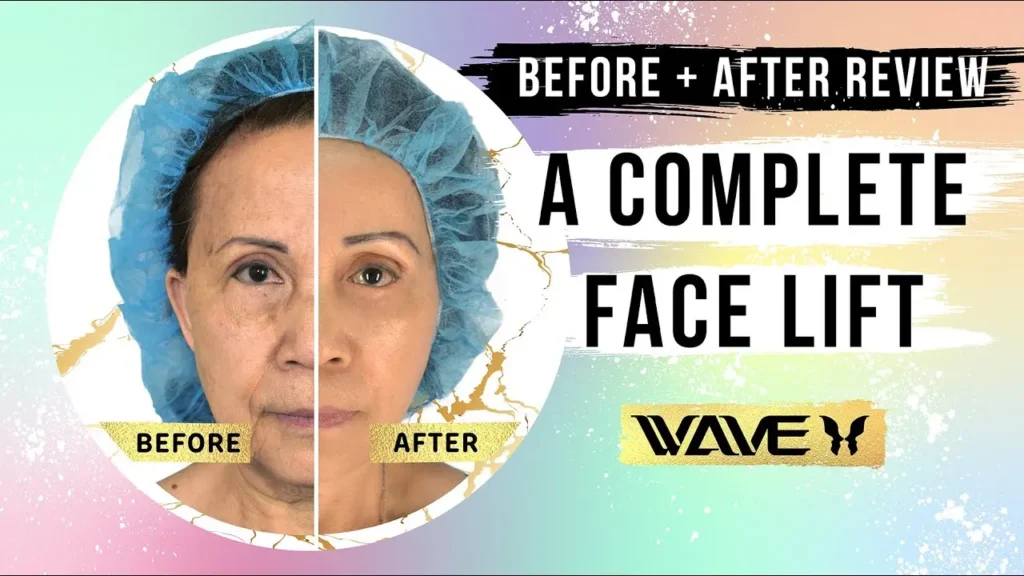



It is a question that comes up more often than you might expect in facelift consultations: can chewing gum undo my results? Patients who have invested in surgical facial rejuvenation naturally want to protect every aspect of their outcome, and repetitive jaw movements — especially habitual gum chewing — raise legitimate questions about tissue strain, swelling, and long-term result stability. The short answer is that chewing gum is unlikely to “reverse” a well-performed facelift, but the timing and context matter considerably. Here is what the science says, and what the surgical team at Wave Plastic Surgery recommends.
What a Facelift Actually Does to Facial Tissue
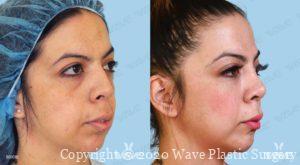
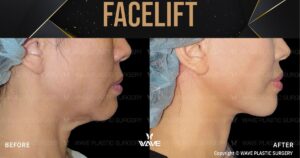
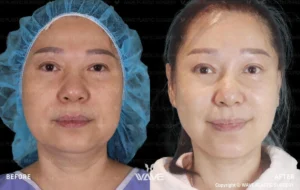
To understand whether chewing gum poses any real risk, it helps to understand what happens structurally during facelift surgery. A facelift (rhytidectomy) does not simply tighten surface skin — the most durable results come from repositioning and tightening the underlying muscular support layer known as the SMAS (superficial musculoaponeurotic system). Techniques like the High SMAS Face and Neck Lift or deep plane facelift work at this deeper structural level, creating results that are anchored to the facial skeleton rather than relying on superficial skin tension alone.
Sutures are placed internally to hold repositioned tissue in its new location while healing occurs over the weeks and months following surgery. Swelling resolves gradually, the skin redrapes, and collagen remodels around the new tissue position. The stability of the final result depends heavily on how well that healing process is protected — particularly during the first four to six weeks.
Why Jaw Movement Matters After Facelift Surgery
The muscles of mastication — the masseter and temporalis muscles primarily responsible for chewing — produce significant mechanical force. While these muscles sit deeper than the tissue planes addressed in most facelifts, repetitive jaw motion does create movement in the overlying facial tissues, particularly around the jawline, jowl area, and lower cheeks. These are precisely the regions that facelift surgery is designed to lift and tighten.
During the early recovery period, internal sutures are still consolidating, swelling is present, and the lymphatic system is working to clear bruising and fluid. Excessive jaw movement during this window can:
- Increase tension on healing incision lines, particularly around the ears and hairline
- Aggravate swelling in the lower face and neck
- Cause discomfort in areas of temporary nerve sensitivity
- Potentially disrupt suture lines in cases of aggressive chewing
Dr. Peter Lee, Founder and Chief Surgeon at Wave Plastic Surgery, emphasizes a conservative approach to the recovery period: the goal is to allow the repositioned tissues to heal and adhere in their new position without unnecessary mechanical disruption. The jaw does not need to be immobilized, but it should not be stressed unnecessarily while tissues are actively consolidating.
The Research on Jaw Activity and Facial Surgical Outcomes
Clinical research on jaw movement and facelift outcomes is limited in scope, but broader wound healing science supports the principle of minimizing repetitive mechanical stress on surgical repair sites. Studies on wound dehiscence consistently identify tension and repetitive motion as contributing factors to delayed healing and widened scarring — both outcomes patients want to avoid after facial surgery.
The American Society of Plastic Surgeons notes that facelift recovery restrictions are not arbitrary; they are designed to protect healing tissue from forces that could compromise the surgical repair before it has fully integrated. Chewing gum is one of the more innocuous-seeming habits that falls into this category because it is so habitual that patients often do not think to ask about it until after they have already done it.
When Is Chewing Gum Actually a Risk?
The risk window is essentially the first two to four weeks after surgery, which aligns with the most active phase of wound healing. This is when:
- Incision sites are freshest and most vulnerable to tension
- Internal sutures are still bearing most of the mechanical load
- Swelling is at its peak and lymphatic drainage is still actively working
- Nerve sensitivity in the lower face may make chewing uncomfortable anyway
After this initial period — and particularly once your surgeon has cleared you at your follow-up appointments — normal jaw function, including moderate chewing, poses no meaningful risk to a properly healed facelift. The deeper structural repairs performed with techniques like the Wave Lift™ or High SMAS approach are secured at a level that routine chewing cannot disrupt once healing has occurred.
For patients navigating the facelift recovery timeline, the general guidance aligns with other low-impact recovery restrictions: soft foods for the first week or two, gradual reintroduction of normal jaw function, and avoidance of anything that places unnecessary stress on the jaw or lower face.
What About Long-Term Habitual Gum Chewing?
Once a facelift is fully healed — typically around the three- to six-month mark when residual swelling has resolved and scarring has matured — habitual gum chewing is not a clinically significant threat to surgical results. A well-executed facelift addresses structural tissue laxity; it does not create a fragile result that can be undone by everyday jaw activity.
That said, some surgeons caution that habitual heavy chewing over years can contribute to masseter muscle hypertrophy — an enlargement of the jaw muscle that can alter the perceived contour of the jawline over time. This is a separate phenomenon from facelift longevity and is relevant primarily for patients who chew gum or clench their jaw very frequently. In those cases, neuromodulator injections targeted at the masseter can help refine jawline appearance and are entirely compatible with maintaining facelift results.
For patients considering the full spectrum of facelift versus non-surgical lift options, it is worth noting that non-surgical treatments like thread lifts are generally more susceptible to disruption from repeated facial movement — another reason many patients ultimately choose surgical correction for lasting results.
Other Habits That Matter More for Facelift Longevity
Chewing gum gets more concern than it probably deserves. The factors that genuinely affect how long facelift results last are:
Sun exposure is one of the most impactful. UV radiation breaks down collagen and accelerates skin laxity — the very changes facelift surgery corrects. Diligent sun protection is among the highest-return habits a facelift patient can adopt for long-term result preservation.
Smoking significantly impairs wound healing by reducing blood flow to healing tissue, and it accelerates skin aging over time. Patients are typically asked to stop smoking well before surgery and remain smoke-free during recovery.
Significant weight fluctuations after surgery can alter facial volume distribution in ways that affect how results appear. Maintaining a stable weight is beneficial for result longevity.
Skincare consistency — including retinoids, growth factors, and medical-grade SPF — supports collagen maintenance and complements surgical results over time.
Sleep positioning in the early recovery period also plays a role. Patients are typically advised to sleep with their head elevated and avoid pressure on the sides of the face. For more detail, see our guide on when you can sleep on your side after a facelift.
What Wave Plastic Surgery Recommends
At Wave Plastic Surgery, post-operative instructions are tailored to each patient’s specific procedure and anatomy. Patients who have undergone more extensive procedures — such as the High Extended SMAS Face and Neck Lift — may have slightly longer timelines for resuming full jaw activity compared to those who have had a mini facelift or endoscopic facelift.
The guiding principle is always the same: protect the healing window, follow your surgeon’s specific instructions, and reach out if something feels unusual. Questions about everyday habits — chewing gum, talking on the phone, exercise, hair care — are welcome and expected. There are no “too small” questions when it comes to protecting a surgical investment.
For patients still researching their options, our facelift recovery tips guide and signs you might be ready for a facelift article offer helpful starting points.
References
- American Society of Plastic Surgeons — Facelift Surgery: https://www.plasticsurgery.org/cosmetic-procedures/facelift
- National Library of Medicine — Wound Healing and Mechanical Stress: https://www.ncbi.nlm.nih.gov/pmc/articles/PMC3459333/
- American Board of Plastic Surgery — Facelift (Rhytidectomy): https://www.abplasticsurgery.org/public-information/
- National Institute of Arthritis and Musculoskeletal and Skin Diseases — Skin Health and Wound Healing: https://www.niams.nih.gov/health-topics/skin-health
Schedule Your Facelift Consultation
If you have questions about facelift recovery, candidacy, or which technique is right for you, the surgical team at Wave Plastic Surgery is here to help. Call (888) 674-3001 to schedule a personalized consultation at our Los Angeles, Orange County, Arcadia, Rowland Heights, or San Francisco locations. Dr. Peter Lee and the Wave team will walk you through every step of the process — from preparation to long-term result protection.