



If you’re considering a facelift, one of the first questions that comes to mind is whether the procedure is painful. It’s a completely natural concern, and the honest answer may surprise you: most facelift patients report far less pain than they anticipated. That said, understanding what you’ll actually experience — during surgery, in the hours after, and throughout the recovery weeks — helps set realistic expectations and takes a lot of the anxiety out of the process.
Below, we walk through each phase of the facelift journey from a comfort standpoint, explain why modern surgical techniques have made the experience more manageable than ever, and share what the team at Wave Plastic Surgery sees firsthand with their patients.
What Happens to Your Body During a Facelift
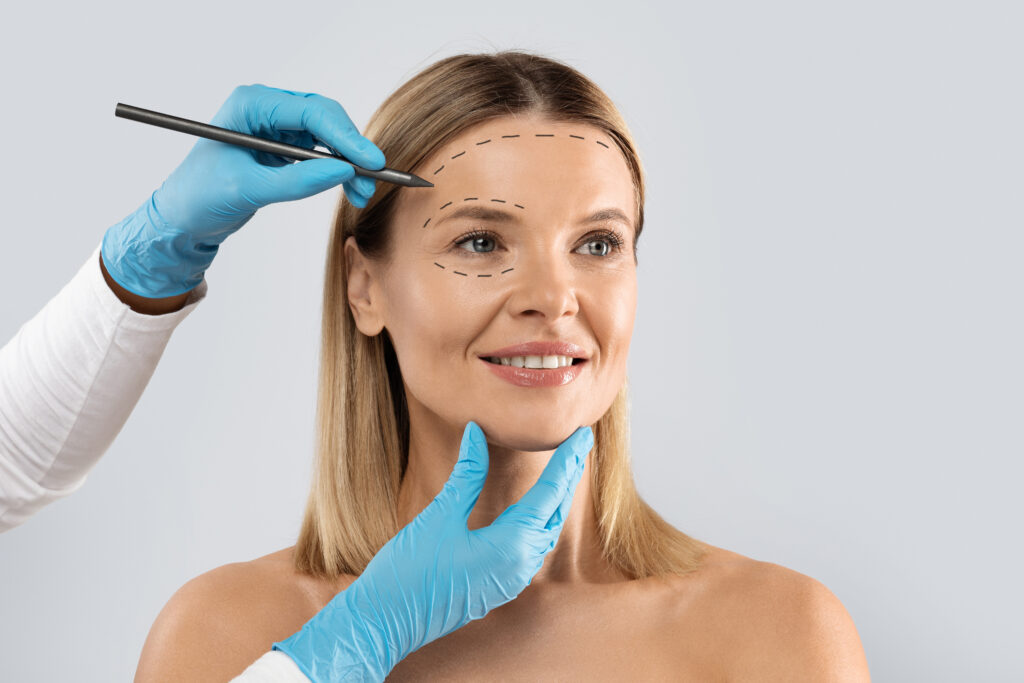
Before addressing pain, it helps to understand what a facelift actually does to the tissues of the face and neck. A facelift (rhytidectomy) involves lifting and repositioning the underlying facial muscles and connective tissue — not just the skin — to restore a more youthful contour to the jaw, cheeks, and neck. Incisions are placed discreetly around the ears and hairline.
Different techniques vary in their depth and scope. A High Extended SMAS Face and Neck Lift, for example, works at a deeper structural layer than a mini facelift and therefore involves a longer recovery — but also produces more comprehensive, longer-lasting results. A mini facelift or the Wave Lift™ uses limited incisions and repositions less tissue, resulting in a quicker, gentler recovery.
Understanding which procedure you’re having is one of the best ways to calibrate your comfort expectations before surgery.
During Surgery: You Won’t Feel a Thing
The good news about the procedure itself is straightforward: you will be under anesthesia the entire time, so you will not experience any pain during surgery. Facelift surgery at Wave Plastic Surgery is performed under either IV sedation with local anesthesia or general anesthesia, depending on the patient’s comfort level and the complexity of the procedure.
As Dr. Peter Lee notes, “From a surgical standpoint, it doesn’t really matter [which anesthesia is used]. It’s more to do with the patient and the anesthesiologist’s comfort.” What matters most is that you feel secure and at ease going into the procedure — your surgical team will work with you to determine the right approach.
The First 48 Hours: Tightness More Than Pain
The immediate post-operative period is when patients are often braced for the worst — and frequently find it more manageable than expected. The dominant sensation after a facelift is not sharp pain but rather tightness, pressure, and a general feeling of heaviness in the face and neck.
Dr. Lee describes it this way: “There’s really no pain associated with the surgery afterwards, but there is swelling.” That experience is consistent across most facelift techniques. Patients who do feel discomfort in the first 24–48 hours typically describe it as mild to moderate soreness, and prescription pain medication is provided to keep that discomfort well controlled.
A small surgical drain is commonly placed to prevent blood from collecting beneath the skin. This is removed after about two days, and most patients are able to wash their hair and shower at that point. A head bandage or compression garment is worn during this initial phase to minimize swelling and support healing.
The First Two Weeks: Swelling, Numbness, and Gradual Improvement
As the anesthesia fully clears and healing begins in earnest, most patients transition off prescription pain medication and onto over-the-counter options like acetaminophen within the first few days. The focus shifts from pain management to managing swelling.
Temporary numbness or decreased sensation in the face and neck is very common and expected — this is a result of the nerves being disturbed during surgery, not damaged. For a High SMAS facelift patient, Dr. Lee explains that “at least for the first one or two months, there will be numbness to the skin around the face.” This sensation gradually resolves on its own as the nerves recover.
By the end of the second week, stitches are typically removed, and about 80% of the visible swelling has subsided for most patients. This is also the point at which the facelift recovery timeline begins to feel more like normal life — many patients feel comfortable going out with light makeup at this stage.
Weeks Three Through Six: Looking and Feeling Like Yourself Again
The discomfort window for most facelift patients closes within the first week to ten days. By weeks three and four, the primary experience is watching the results emerge rather than managing symptoms. Some residual tightness or sensitivity may linger, particularly around the incision areas, but it is generally not disruptive to daily activities.
Sleeping position, activity restrictions, and sun avoidance remain important during this phase — not because of pain, but to protect healing tissue and support optimal scarring. For more detail on navigating this period, see Wave’s guide on how long it takes to recover from a facelift.
Does the Type of Facelift Affect How Much It Hurts?
Yes — to a degree. More extensive procedures involve larger incisions, more tissue repositioning, and therefore a slightly more involved recovery. However, the difference in pain level between a mini facelift and a full SMAS lift is often less dramatic than patients expect, because both are performed under full anesthesia and managed with the same post-operative protocols.
What does vary meaningfully is recovery duration. A Wave Lift™ patient may return to social activities in about two weeks, while a full face and neck lift patient is typically looking at three weeks before 80% of swelling resolves and solid six months before the final result is fully visible. If you’re weighing your options, comparing mini facelift vs. full facelift costs and recovery can also help you make a well-rounded decision.
For patients not yet ready for surgery, non-surgical options like a thread lift or FaceTite involve minimal downtime and even less discomfort — though they deliver more modest results. Reviewing the differences between surgical and non-surgical lifts is a helpful starting point if you’re still deciding.
Tips for Keeping Facelift Recovery as Comfortable as Possible
Surgical technique matters enormously when it comes to post-operative comfort and healing. Beyond that, there are several patient-controlled factors that significantly influence the recovery experience:
Sleep position. Keeping the head elevated in the early days reduces swelling and pressure. Most surgeons recommend sleeping on your back with the head raised for at least the first one to two weeks. For guidance on when you can return to side sleeping, see this resource on sleeping after a facelift.
Activity level. Avoiding strenuous activity, bending, and heavy lifting for the first two to three weeks prevents excess swelling and protects healing incisions.
Medications. Avoiding blood thinners — including aspirin, ibuprofen, and certain supplements — before and after surgery reduces bruising and bleeding risk.
Hydration and nutrition. Staying well hydrated and eating a nutrient-dense diet supports faster tissue healing.
Following post-operative instructions closely. Your surgical team’s aftercare guidelines are specifically designed to minimize complications and maximize comfort. Adhering to them is the single most effective thing patients can do.
What About Emotional Discomfort?
It’s worth acknowledging that even when physical pain is well controlled, recovery can feel emotionally challenging. Seeing significant swelling, bruising, and a temporarily altered appearance in the mirror can be disconcerting for patients who weren’t fully prepared for the in-between phase.
This is one of the reasons consultation and patient education matter so much before surgery. Dr. Lee is known for his thoroughness in helping patients understand exactly what to expect at each stage. As he explains, “patients these days are extremely sophisticated and they want to know the details” — and walking into surgery with that knowledge makes the entire experience more manageable.
Schedule Your Facelift Consultation
If you have questions about facelift surgery, pain, recovery, or which technique is right for you, the team at Wave Plastic Surgery is here to help. Dr. Peter Lee and his colleagues serve patients throughout Los Angeles, Orange County, San Francisco, and beyond. Call us at (888) 674-3001 to schedule your personalized consultation.