




Facelift surgery has changed dramatically: modern techniques reposition deep tissue instead of pulling skin, which is why today’s results look natural and last far longer than the lifts of a generation ago.
If your only mental image of a facelift is the tight, windblown look of decades past, that fear is understandable, and outdated. Today’s facelift surgery is built around natural movement and proportion, and here we explain what actually changed.
Key Takeaways
- Deep-tissue repositioning: modern lifts move the SMAS, not just skin
- Natural, not pulled: the windblown look is a thing of the past
- Longer-lasting: results hold for a decade or more
- Faster, easier recovery: than older techniques
- Tailored to your face: several techniques to match your anatomy
- A consultation finds your fit: based on how you are aging
Key Takeaways
- Deeper is better: Modern facelifts lift the SMAS and muscle layers, not just skin, which avoids the tight, “pulled” look of older techniques.
- Results last longer: Deep plane and extended-SMAS lifts can hold their results for roughly 10–15 years, compared with the shorter lifespan of skin-only lifts.
- Recovery is faster: Refined techniques and smaller incisions mean many patients resume daily activities in about 1–2 weeks.
- Scars are better hidden: Incisions are tucked into the hairline and natural creases around the ear.
- It’s personalized: Surgeons now tailor the technique to your bone structure, skin quality, and aging pattern instead of using one approach for everyone.
- It pairs well: Many patients combine surgery with neck lifts, fillers, or skin resurfacing for balanced, comprehensive results.
From Skin-Only Lifts to Deep-Tissue Repositioning
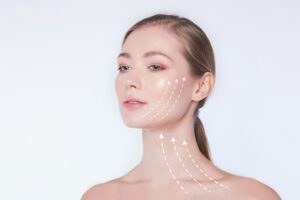
To understand why facelifts improved, it helps to know what changed beneath the surface. The biggest leap was the decision to stop pulling skin and start lifting the structures that actually support the face.
Early facelifts focused almost entirely on tightening skin. Surgeons would lift and re-drape the skin under tension, which could smooth wrinkles temporarily but often produced a flat, windswept appearance. Because skin alone has limited holding power, those results also tended to fade within a few years.
The turning point came when surgeons mapped the deeper layers of the face. In 1976, Mitz and Peyronie formally described the superficial musculoaponeurotic system, or SMAS, a sheet of muscle and connective tissue beneath the skin. Lifting and securing this layer created smoother jawlines and necks with far more natural results, and the SMAS face and neck lift remains a foundation of facial rejuvenation today.
A Timeline of Facelift Innovation
Each advance built on the one before it, moving progressively deeper and becoming more refined. The table below traces the major milestones that shaped the modern procedure.
| Era | Technique | What It Repositioned | Key Advance or Limitation |
|---|---|---|---|
| Early–mid 1900s | Skin-only lift | Skin surface only | Short-lived results; risk of a pulled look |
| 1969 | Skoog deep-fascia lift | Skin with superficial fascia | First move below the skin for more lasting results |
| 1976 | SMAS rhytidectomy | Skin and the SMAS layer | Became the long-standing gold standard |
| 1990 | Deep plane facelift | Skin and muscle as one unit | Releases ligaments and repositions fat pads |
| 1992 | Endoscopic facelift | Deeper tissue via tiny incisions | Smaller scars and faster healing |
| Today | Customized deep plane and extended SMAS | Tailored, layered repositioning | 3D planning for natural, durable outcomes |
Why the Deep Plane Made Such a Difference
By 1990, surgeons were working below the SMAS itself. This is where the most dramatic gains in natural-looking results came from.
The deep plane facelift lifts the skin and muscle together as a single unit. By releasing the deeper retaining ligaments and repositioning fallen fat pads, surgeons restore volume to the midface and jawline without putting the skin under tension.
Because the tissues move together, the skin lays smoothly rather than tightly. That distinction is the whole point of a modern lift, and it is why results look soft and refreshed instead of obviously surgical.
Smaller Incisions and Faster Recovery
Technique was only half the story. The tools and incisions also evolved to make the experience easier on patients.
The introduction of endoscopic surgery in the early 1990s allowed surgeons to reach deeper tissue through small, well-hidden incisions. An endoscopic facelift uses a tiny camera and instruments to lift and reposition tissue with minimal disruption, which reduces visible scarring.
Less tissue trauma also means a smoother recovery. Many patients today return to most daily activities within one to two weeks, a significant improvement over the extended downtime of earlier eras.
Old Facelift vs. Modern Facelift at a Glance
The contrast between traditional and contemporary approaches is easiest to see side by side. The differences below explain why patient satisfaction has climbed alongside the technique.
| Feature | Traditional Facelift | Modern Facelift |
|---|---|---|
| Primary target | Skin tension | Deeper SMAS and muscle layers |
| Typical appearance | Pulled or windswept | Natural and refreshed |
| Incisions | More visible | Hidden in hairline and creases |
| Longevity | Faded within a few years | Often 10–15 years with deep plane |
| Recovery | Extended downtime | Often 1–2 weeks for daily activities |
| Planning | One-size-fits-all | Personalized to anatomy and aging |
| Companion treatments | Rarely combined | Often paired with fillers, lasers, or neck lift |
Personalization Is the Modern Standard
Perhaps the most important improvement is that there is no longer a single “facelift.” The best result comes from matching the right technique to the right patient.
A surgeon now weighs your skin quality, bone structure, age, and personal goals before recommending an approach. Someone with early, localized aging may be a candidate for a mini facelift, while more advanced changes may call for a comprehensive deep plane or extended-SMAS lift.
That judgment depends heavily on surgical experience. Wave’s founder and chief surgeon, Dr. Peter Lee, MD, FACS, is a board-certified plastic surgeon and Advanced ENDOTINE Bioskills surgeon educator who has trained other surgeons in endoscopic and deep-tissue techniques. You can learn more about the board-certified surgical team behind Wave’s approach to facial rejuvenation.
What This Means for You
The takeaway is reassuring: the facelift you might picture from decades past is not the facelift performed today. Contemporary methods are designed specifically to preserve your identity while restoring a more youthful contour.
If you have hesitated because of outdated assumptions, a consultation is the clearest way to understand which modern technique fits your face and goals.
Schedule Your Personalized Consultation
Curious which modern facelift technique is right for you? At Wave Plastic Surgery in Los Angeles, Orange County, and San Francisco, our board-certified surgeons will assess your facial anatomy, discuss your goals, and walk you through the options that fit you best. Call (888) 674-3001 to book your consultation and take the first step toward natural, lasting results.